
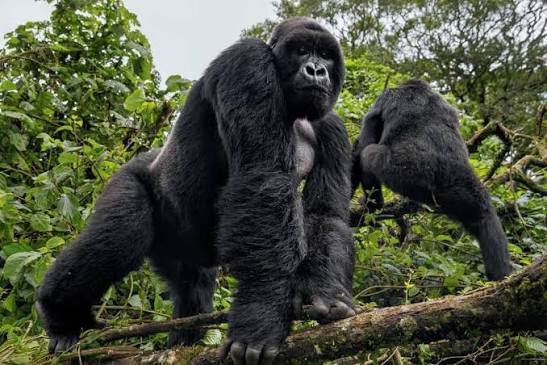
Gorilla trekking rules in Uganda are sought to conserve and preserve the already endangered mountain gorillas left after their depletion due to various factors like poaching, human settlement.
However, these rules and regulations are also geared at protecting the visitors from the wild animals.
At all times, visitors should adhere to gorilla trekking rules in Uganda while on expeditions in Bwindi Impenetrable National Park so that the conservation of the mountain gorillas and their habitat be maintained.
The Uganda Wildlife Authority (UWA) has established gorilla trekking guidelines to protect visitors, gorillas, and the fragile forest ecosystem.
These Gorilla Trekking guidelines in Uganda cover everything from the minimum age and required distance from gorillas to photography, health, group size, and responsible behavior.
Understanding gorilla trekking guidelines in Uganda before your trip will help you prepare properly and ensure that your encounter with the gorillas is safe, respectful, and conservation-friendly.
Why Do Gorilla Trekking Rules in Uganda Matter?
Mountain gorillas are wild animals and share a close genetic relationship with humans.
That makes responsible interaction particularly important because diseases that are relatively mild in humans can potentially affect gorillas.
Conservationists put the above gorilla trekking regulations to make sure that tourism in Bwindi is sustainable.
If tourist visits are not controlled, disastrous effects of mass tourism can happen in destinations that we need to preserve for not only the present but also future generations.
Therefore, the rule of take nothing but pictures must be adhered so that we can promote sustainable tourism in not only Bwindi Impenetrable National Park but also other destinations that host the great apes!
By following the rules above and through purchase of a permit, you are contributing to the conservation of the Mountain Gorilla.
General Gorilla Trekking Rules in Uganda for Visitors
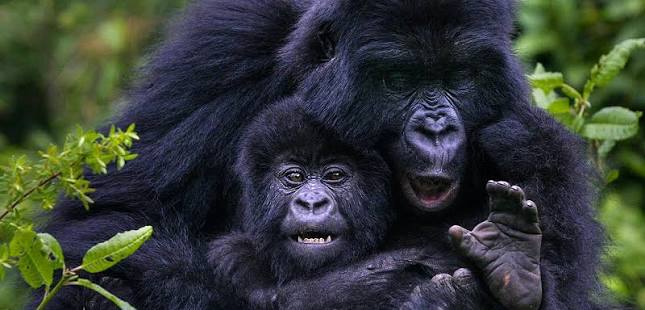
Before going into detail, here are the most important rules every visitor should understand:
1. Maintain the required distance from the gorillas.
This is one of the most frequently asked questions about gorilla trekking in Uganda and other destinations such as Rwanda and Congo.
Keep a minimum of 7 meters (21 feet) from the Mountain Gorillas.
This distance is strictly crucial protect the Mountain Gorillas from human disease transmission because they are susceptible to human illnesses, and close contact can also create unnecessary risks for both humans and animals.
2. Follow your ranger’s instructions at all times.
If a gorilla approaches you or shows signs of aggression such as crouching down and avoiding direct eye contact, stay calm, relaxed and follow your ranger instructions that were detailed during the pre-trek briefing.
Firstly, it should be deliberate that you maintain the distance given to you by the rangers during the morning briefing.
Do not be tempted to chase or touch the gorilla as a way of building confidence because this increases its aggressive levels.
Why is the recommended distance important?
The recommended distance by the rangers is meant to;
Protect disease transmission to the mountain gorillas. This is because they are 98% human and so anything like a cold can mean a lot in their families
Prevent unnecessary stress to the gorillas from the visitors.
Reduce the possibility of aggressive or defensive behavior as they are entirely free in their territories.
Make the encounter safer for everyone and have sustainability of the species that are susceptible to diseases as they share 98% of human DNA.
3. Do not use flash photography.
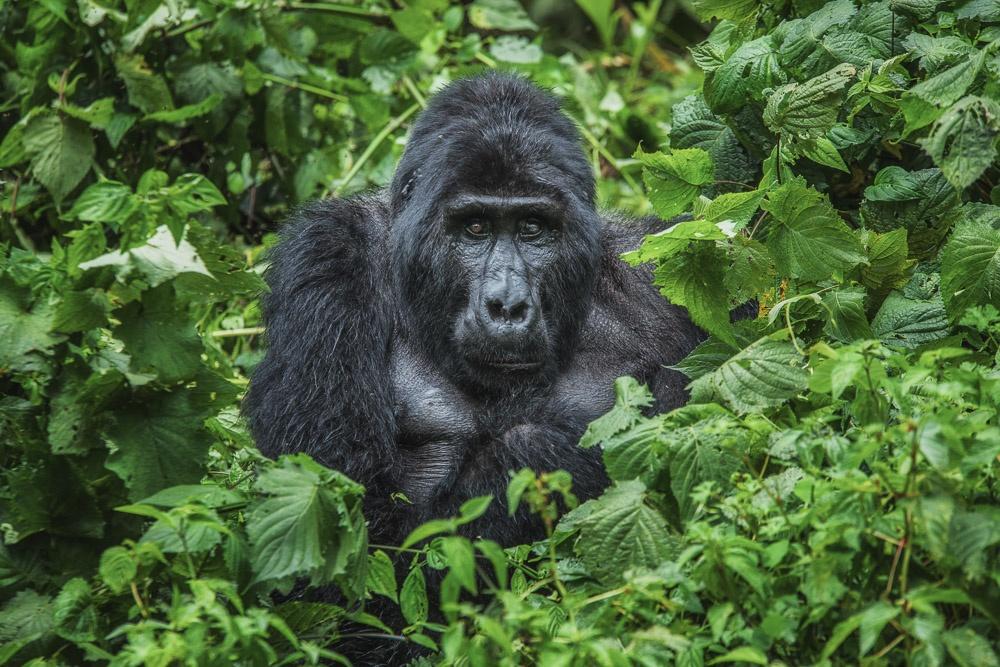
Photography is an important part of the gorilla trekking experience, but taking photographs should never come before the welfare of the animals.
One of the clearest gorilla trekking rules in Uganda is that visitors should not use flash photography. UWA specifically lists flash photography among the prohibited activities during gorilla tracking.
Before your trek, you are advised to:
Turn off your camera’s flash light because this creates aggression among the gorillas which can make them wild and thus attacking the visitors.
Familiarize yourself with your camera settings to have the best experience and capture memorable events.
Carry extra batteries or a power bank where appropriate because the experience entails a lot of moment capture and before it comes to an end, the camera battery may be down due to the weather conditions.
Use a quiet camera mode when taking pictures of the gorilla families because this keeps the environment conducive both for the visitors and the gorillas.
Keep your camera secure while walking through the forest in the backpack which guards it against unexpected rainfall and dusty moments depending on the visiting time.
During the encounter, ensure the following Photography rules are respected:
Follow your ranger’s instructions. In most cases it is the rangers that will inform you when to get your cameras ready during this moment with the gorillas.
Do not move closer to get a better photograph. Maintain the recommended distance not to upset the gorillas and also protecting them from diseases because even good pictures can be taken at a distance depending on your camera qualities.
Avoid sudden movements. Sometimes the gorillas charge and so get ready physically for the trek.
Do not block other visitors’ views. If this happens, these visitors who have been blocked will be compelled to make sudden movements which can make the gorillas harsh.
Put the camera away when instructed by the guides as they are well versed with the different gorilla families and their behavioral changes.
4. Stay with your trekking group.
You must stay in a tight group when you are near the mountain gorillas.
Visitors must stay in a tight group near mountain gorillas to appear as a single, large, non-threatening object rather than scattered prey or individual rivals This keeps the silverback calm, prevents confusion, and stops gorillas from feeling surrounded or defensive.
5. Do not eat, drink, or smoke while tracking the gorillas.
Do not eat or drink while you are near the mountain gorillas.
This helps prevent situations in which gorillas could become interested in human food or other items.
In case you feel that food or water during the trekking experience is a must for your sustainability, follow the instructions of your guide about where and when it is appropriate to stop and have refreshments for the new task ahead.
6. Never touch or attempt to feed a gorilla.
Never feed a gorilla because this incurs a penalty from Uganda Wildlife Authority of UGX 100,000/=.
Feeding wildlife can alter natural behavior and potentially create dependence or conflict.
7. Do not trek if you have a cold or other infectious illness.
Health considerations are the most important gorilla trekking regulations in Uganda.
If you are feeling ill, or have a contagious disease when you are already at the park, please volunteer to stay behind.
This is because the mountain gorillas are vulnerable to infectious diseases as they are 98% human in their DNA composition.
An alternative visit will be arranged for you or you will be refunded your money as per gorilla reservation guidelines rather than infecting an entire gorilla family with a contagious disease.
8. Cover your mouth and turn away if you need to cough or sneeze.
If you feel the urge to cough or sneeze when you are near the Mountain Gorillas, please turn your head away and cover your nose and mouth in order to minimize the spread of viruses or bacteria to the families.
9. Visitors must meet the minimum age requirement.
The prescribed minimum age for gorilla trekking in Uganda is 15 years, according to Uganda Wildlife Authority’s published tracking rules as of 2026/2028.
However, these children can be allowed to enter the park but can not be involved in these tiresome and long-day activities.
This insinuates that humans below the age of 15 generally cannot participate in standard gorilla trekking experience due to reasons such as physical stability and others to mention.
Why is there an age limit?
Gorilla trekking experiences in the wild are detailed and can call for:
Long walks through dense forest searching and locating the gorilla family that they were allocated.
Steep and uneven terrain that involved muddy and slippery surfaces that are so hard for children to overcome. Moreover, for some adults, they even need porters to help them with more support.
Extended periods of walking and waiting. In most cases where the allocated family is far from the accommodation facilities, the trek means walking long distances with high levels of patience that finally the family will be located.
Following strict wildlife rules such as keep the voice low and not having sudden movements. Such rules are inevitable for the children below the age of 15 years.
Remaining calm and quiet around gorillas. Most of the children below the recommended age are so anxious and will finally be forced to scream or run when a gorilla approaches them which can make them charge thus an attack.
And of which all the above mentioned are more of a punishment to the children below the age of 15 years.
10. Do not attempt to attract, chase, or provoke gorillas.
A gorilla approaching your group or you personally during the trek can be seen as exciting moments of the trek but it is very dangerous if you do not know what to do.
If a gorilla approaches you or shows signs of aggression such as crouching down, stay calm and relaxed.
Additionally, remember to follow the instructions being offered to you by the rangers.
Do not be tempted to shout, run away, follow it when it moves away or also try to block its path but rather just follow the instructions from the rangers because they are experienced and trained in animal behavior
11. Keep noise to a minimum.
Gorilla trekking takes place in the wild and not the protected zoo places like Entebbe.
And therefore keeping voices under control allows you to observe the gorillas and other wildlife or bird species more naturally and reduces unnecessary disturbance in the forest.
If you located the gorilla family while they are playing, resting, feeding, moving, chanting around the tree branches or interacting with one another, let them continue without interference but rather just observe.
12. Do not litter in the forest.
Uganda Wildlife Authority’s park rules prohibit littering and also prohibit visitors from picking and carving flowers or destroying vegetation they got while on their trail because protecting and preserving such greener places mean preserving wildlife like gorillas.
Anything you bring into the forest such as food packaging, plastic water or juice bottles, tissue, batteries, etc. should come back out with you unless park staff specifically instruct otherwise because the forest is their home and so it should be left clean.
13. Carry your permit and required documentation.
A gorilla permit is an official legal document issued by Uganda Wildlife Authority that grants you access to a specific national park to track a habituated mountain gorilla family.
Because gorilla tourism is guided, visitors should organize their permits through the appropriate official channels or a registered tour operator.
UWA has also issued specific guidance concerning the purchase of gorilla and chimpanzee permits.
Uganda Wildlife Authority’s published 2026/2028 tariff documentation states that gorilla and chimpanzee permits for certain designated forest reserve and other arrangements can only be booked through licensed tour operators.
What should you check before buying a permit?
Permits can be purchased directly through government wildlife bodies or, more commonly, through a registered tour operator.
Over 90% of travelers book their permits through a registered safari agency.
Select a tour operator registered with the Association of Uganda Tour Operators (AUTO).
Provide your preferred dates and a scanned copy of your passport (wildlife authorities require your age, nationality, and passport number to issue the permit).
You pay the tour operator, who then buys the permit on your behalf.
The operator will send you a scanned copy of the permit showing your name and tracking date. They will hand you the physical card or paper permit upon arrival.
This is easier because tour operators handle the logistics of matching your permit sector with your lodge location.
In Bwindi, for example, if you buy a permit for the Northern sector (Buhoma) but book a lodge in the Southern sector (Rushaga), you face an impossible 4-hour drive on rough mountain roads at 5:00 AM. Operators eliminate this risk.
14. Dispose of human waste according to park instructions.
If you need to go to the “toilet” while in the forest, please ask the guide to dig you a hole and ensure you cover it when you have finished.
15. Respect the one-hour viewing limit.
The gorilla trek itself can take considerably longer than the actual gorilla viewing session because some families take visitors 2 to 6 hours to locate.
Gorilla trekking can last approximately 2 to 6 hours depending on the trek, while visitors receive strictly one hour of observation and taking photographs with a habituated gorilla family.
You may spend several hours hiking through the forest, but the regulated gorilla observation period is much shorter and limited to one hour.
Why is the viewing period limited to 1 hour?
The viewing period for the mountain gorilla families by the visitors is limited because it helps to;
Reduce human disturbance to the gorillas. These gorillas once located are busy doing their own things like playing, cuddling in the wild and so presence of humans for so long disturbs their peace in the jungle.
Manage the number of people interacting with a gorilla family. A maximum number of eight (8) visitors may visit a group of habituated Mountain gorillas in a day. So, this time minimizes behavioral disturbance to the gorillas and the risk of their exposure to human borne diseases.
Support long-term conservation. This comes as a result of humans not being so close to the gorillas which makes them more vulnerable to diseases. But with this limited time of viewing, gorillas can be saved from such risks.
The moment your ranger indicates that the viewing period is ending, enjoy your final moments and prepare to leave rather than trying to extend the encounter because you still have moments you want to capture.
What Should You Wear and Carry in respect of Gorilla Trekking rules in Uganda?
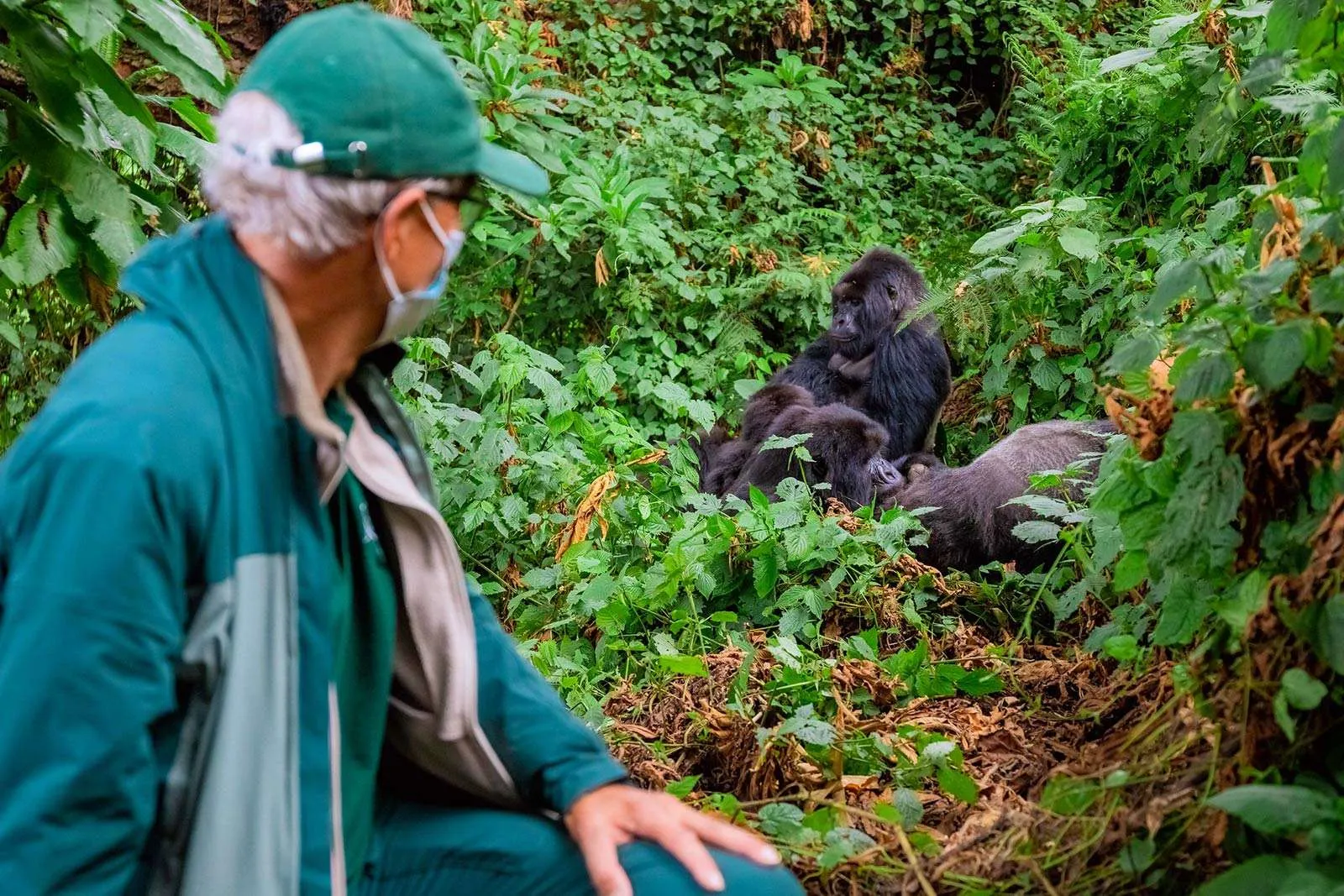
While clothing is not technically a “rule,” being properly prepared can make a major difference to your experience.
Gorilla trekking takes place in mountainous rainforest environments, where conditions can be wet, muddy, steep, and unpredictable.
Recommended clothing
Consider wearing:
Long-Sleeved Safari Shirts: Never trek in a short-sleeved t-shirt or tank top. A sturdy, lightweight, and breathable long-sleeved shirt is your frontline defense against scratchy vines, low-hanging branches, and airborne insects. Synthetic blends or merino wool are ideal because they dry quickly when you sweat.
Durable Long hiking Trousers: Choose quick-drying trekking pants or sturdy safari trousers. Avoid thin leggings, which stinging nettles can effortlessly pierce. Many travelers prefer convertible zip-off pants, which allow you to zip the legs back on for the trek and convert them into shorts while relaxing back at the lodge.
Waterproof rain jacket: Essential for braving the unpredictable daily downpours of the equator. Because there is no true dry season, you will need this protection while exploring national parks like Bwindi Impenetrable Forest and Volcanoes National Park. The weather can change from bright sunshine to a violent tropical storm in under ten minutes, meaning you will get caught in the rain on almost every trek.
Warm Mid-Layer: A lightweight fleece jacket or wool sweater is perfect for the chilly morning hours before the sun breaks through the canopy.
Waterproof Hiking Boots with Ankle Support: Do not attempt this trek in standard running shoes, tennis sneakers, or fashion boots. You need broken-in, waterproof hiking boots that feature deep tread or rubber lugs for maximum traction on slick, muddy mountain walls. Ankle-high support protects you from twisting a joint on hidden roots or loose stones.
Thick Trekking Socks: Pack high-quality wool or synthetic hiking socks. The ultimate insider tip for any primate trek is to tuck your trousers directly into your socks. While it may not look like a high-fashion statement, this creates an impenetrable barrier that prevents biting safari ants and leeches from crawling up your legs.
Gardening Gloves: This is one of the most highly recommended tips by veteran park rangers.
As you climb steep mud banks, you will instinctively reach out to grab vines, saplings, and roots for balance. A pair of simple, heavy-duty gardening gloves protects your palms from thorns, sharp nettles, and stinging caterpillars.
Wide-Brimmed Sun Hat and Sunglasses: The forest canopy can block out the sun, but you will occasionally trek through open ridges, clearings, and community farmland where the high-altitude equatorial sun can be incredibly intense.
Useful items to carry
Bug spray and medical kit: Pack DEET repellent, personal prescriptions, and malaria pills. Blister pads are vital for treating friction hot spots caused by stiff boots on steep slopes.
Zoom Camera: Flash photography is banned to protect the gorillas. Since these habituated animals tolerate humans, you will get as close as 7 to 10 meters. A high-quality camera lets you capture unique moments, like nursing mothers, playful infants, and massive silverbacks guarding their families.
Spare Batteries: Dense forest air at high altitudes (up to 3,000 meters) drops temperatures significantly. This intense cold slows down the internal chemical reactions in lithium-ion batteries, draining your device’s power rapidly.
Energy bars: Perfect for a fast boost during brief stops. Safari lodges usually pack heavy lunches, but guides only permit a full meal break after you find and spend time with the gorillas. If your trek takes five hours, a quick snack keeps you energized without the need to unpack a large lunch box.
Water and high-energy snacks: Carry 2+ liters of water and snacks like nuts or granola. Gorilla tracking is unpredictable, lasting between 30 minutes and 7+ hours.
Personal gear: Bring small folding poles to stay steady on the path. These tools assist in climbing or moving past obstacles like fallen logs, slick bamboo stems, and unseen tree roots. A walking stick lets you test ground stability before stepping and helps pull you over large obstacles.
Avoid carrying unnecessary items. A lighter backpack is much easier to manage on steep forest trails.
16. Respect park staff and conservation procedures.
The wildlife rules are not optional suggestions. They are part of the management of protected wildlife areas and so they should be adhered and respected by all those intending to visit the parks or reserves.
Your ranger and trekking team are responsible for guiding visitors and ensuring that the established conservation procedures are followed and in case one breaks the rules, they face penalties and fines as outlined by the 2026/2028 Uganda Wildlife Authority tariff.
If a visitor deliberately ignores or breaks instructions for example, by following a gorilla, feeding a gorilla, attempting to touch an animal, using prohibited photography equipment, or littering, they can undermine both visitor safety and conservation efforts.
The most appropriate way to avoid penalties and fines is to listen carefully during the morning briefing by the rangers and follow ranger instructions throughout the experience because they are considerably more experienced.
Gorilla Trekking Rules in Bwindi Impenetrable National Park vs Mgahinga Gorilla National Park.
Uganda’s has two major gorilla trekking destinations which are:
Bwindi Impenetrable National Park
Mgahinga Gorilla National Park
UWA confirms that gorilla trekking takes place in both parks. Bwindi Impenetrable National Park is divided into four main trekking sectors such as Buhoma, Ruhija, Rushaga, and Nkuringo.
Mgahinga Gorilla National Park is part of the Virunga landscape and contains three volcanoes, providing a different forest and mountain setting for the Gorilla trekking experience.
However, another important difference to note is that the Gorilla Habituation Experience is only limited to Bwindi Impenetrable National Park where the visitors are allowed to spend four hours with the semi-habituated gorilla families alongside researchers. This is only limited to 6 visitors per family and it costs differently from the standard gorilla trekking
Are the rules different in Bwindi Impenetrable National Park & Mgahinga Gorilla National Park?
The fundamental visitor rules and regulations are conservation-based and apply to gorilla trekking as a regulated activity in both Bwindi Impenetrable National Park and Mgahinga Gorilla National Park.
Whether you trek is scheduled in Bwindi Impenetrable National Park or Mgahinga Gorilla National Park, expect to follow the instructions offered by the rangers during the pre-trek concerning distance, health, photography, group behavior, food and drink, litter, viewing time, ranger instructions.
The exact logistics of your gorilla trekking can vary depending on the National Park you plan to visit, the trekking sector in the park such as Buhoma, Ruhija, Rushaga and Nkuringo, type of gorilla family, weather conditions in the park, and conditions on the day your trek is scheduled to take place.
Responsible Gorilla Trekking in Uganda
Respectfully, following the prescribed rules and regulations is considered the only one part of responsible gorilla tourism because such rules are driven towards ensuring a successful and safe experience for both the visitor and the gorillas.
A responsible traveler should also entrust themselves in learning how their visit through the purchase of permits, hiring of local porters and tipping affects the wider ecosystem and surrounding communities.
Respect the local communities
Gorilla trekking takes place in areas where communities live around protected forests such as Rushaga, Ruhija, Buhoma and Nkuringo. Visitors should therefore treat local people like the Batwa, guides, porters, businesses, and cultural sites with respect and dignity for the future tourists.
Consider hiring a porter
If porters are available through the official or recognized trekking system in both recognized parks of Uganda safari, hiring one to help you carry the backpack, push you through muddy and slippery terrain can make the hike easier while providing income to someone from the local community.
Support local businesses
Where practical & appropriate, spend some money with legitimate local businesses such as local banana brew, accommodation providers such as Nkuringo Gorilla Lodge & Four Gorilla Lodge, restaurants, craftspeople for hand-made crafts, and community initiatives like Bwindi Community Hospital, Bwindi Bar Training Program.
Respect conservation efforts
The gorilla trekking experience depends on greener forests and protected gorilla populations.
Gorilla Trekking can help create economic incentives for conservation through the priced permits, but visitors should understand that conservation is a long-term responsibility rather than simply a tourist attraction.
UWA describes community involvement, revenue sharing, enterprise development, and conservation education among its approaches to wildlife conservation such as community infrastructural development like roads to ease movements.
Responsible Gorilla trekking in Uganda therefore means leaving a positive footprint and not simply taking photographs and leaving the country with memories that can never be recreated if the gorilla families are not protected and conserved through anti-poaching techniques, Uganda Wildlife Patrols in Parks.
Frequently Asked Questions About Gorilla Trekking in Uganda
What are the gorilla trekking rules in Uganda?
The most emphasized Gorilla trekking rules in Uganda include maintaining the 7-meter distance required from mountain gorillas, avoiding flash photography, not eating or drinking during the trekking, not visiting the mountain gorillas when sick, keeping the forest clean, following park ranger instructions, and respecting the recommended one hour viewing period.
How close can you get to gorillas in Uganda?
Published gorilla trekking rules in Uganda by Uganda Wildlife Authority as of 2026/2028 tariff specify a 7-meter (21 to 23-feet) distance from gorillas. It is advised that if a gorilla moves closer on its own, stay calm, relaxed and follow the instructions of your ranger rather than attempting to approach or touch it.
Can you touch a gorilla while trekking?
No. Visitors are not allowed to touch mountain gorillas. If a gorilla approaches you, remain calm and follow your ranger’s instructions that were offered during the pre-trek or those that are offered in certain circumstances.
Can children go gorilla trekking in Uganda?
According to Uganda Wildlife Authority’s published rules, the minimum age for gorilla tracking is 15 years.
Can I take photos of gorillas?
Yes, photography is an important part of the experience, but flash photography is not permitted. Follow your park ranger’s instructions and never move closer to a gorilla simply because you want to capture better photographs of the gorillas.
What happens if a gorilla approaches you?
Stay calm, natural, avoid sudden movements, do not follow the gorilla as it walks away, do not be tempted to block its path, do not attempt to touch the mountain gorilla, never run because you are scared of the gorilla and follow your ranger’s instructions.
How long can you stay with gorillas?
Gorilla trekking experience according to the Uganda Wildlife Authority tariff can take around 2–6 hours overall, while the actual observation period with a habituated gorilla family is strictly one hour to observe the gorilla and take photographs of them playing, feeding or resting.
What should I wear for gorilla trekking?
Wear sturdy hiking boots, long trousers, long sleeves, and rain protection. Gardening gloves can be of use when moving through dense vegetation. Conditions can be wet and muddy, so waterproof clothing is particularly useful.
Can you trek gorillas if you are sick?
No. You should not visit the gorillas if you have a cold or another infectious illness. Uganda Wildlife Authority specifically lists this as one of the gorilla trekking rules in Uganda because of the potential health risks to the animals as they are nearly our brothers because they share 98% human DNA.
How difficult is gorilla trekking in Uganda?
The difficulty varies considerably depending on the location of the gorilla family, terrain, weather condition, and your fitness level.
Gorilla trekking is considered as requiring moderate fitness and the activity may last approximately two to seven hours depending on the various factors mentioned above.
In Conclusion, Gorilla trekking in Uganda is an unforgettable experience and a unique opportunity to see mountain gorillas in their natural habitat.
Following the gorilla trekking rules in Uganda helps protect both visitors and these endangered animals.
Maintain the required distance, avoid touching or feeding gorillas, keep noise low, and always follow your ranger’s instructions.
By trekking responsibly, you help support gorilla conservation and ensure this incredible experience remains available for future generations.